
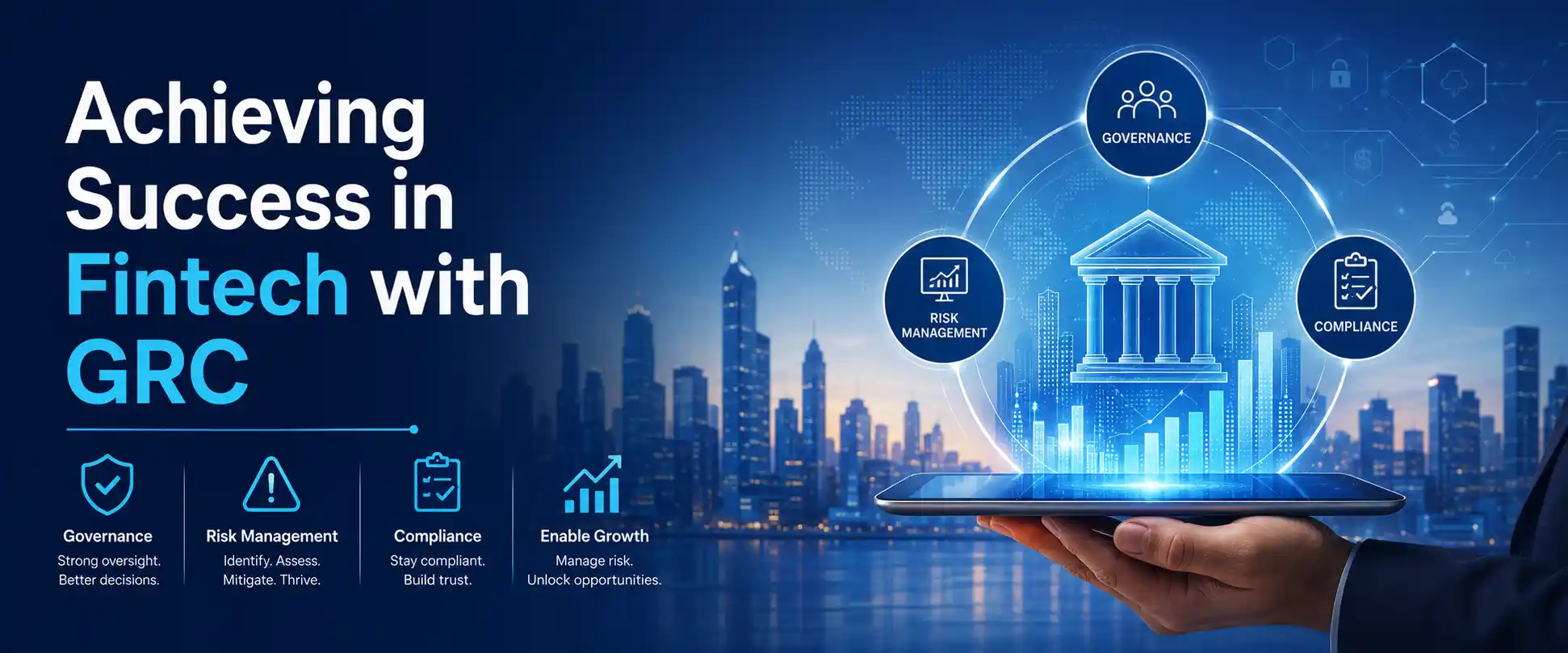
In today’s fintech landscape, success requires more than just advanced technology. Why? Imagine if the RBI catches a fintech company flouting some rules, or a virus creeps in and damages all the data. Did you know that the financial sector faced 13 lakh cyberattacks between January and October 2023? What if customers lose trust?
Clearly, there’s more to success than just top-notch technology. Companies must also focus on effective Governance, Risk Management, and Compliance (GRC) to succeed today. In the last article, I introduced you to my best friends G, R, and C. If you missed it, here’s the link: XXXX
This article explores the critical role of governance and compliance in the Banking, Financial Services, and Insurance (BFSI) sector, especially in fintech.
Rising Challenges
Recently, RBI found several banks, NBFCs, and fintech players violating several compliance standards or regulations.
For instance, Nainital Bank’s servers got hacked, resulting in a loss of Rs. 17 crores, while hackers manipulated Razorpay’s authorization process, leading to losses of Rs. 7 crores.
Another investigation found 600 illegal lending apps in India, linked to 1,100 entries across 81 app stores. Many non-regulated entities have promoted them.
Scammers are also impersonating bank representatives, threatening customers with account freezes and instructing them to download unauthorized apps that compromise personal information.
Globally, cyberattacks are sharply increasing in the financial sector, with social engineering incidents most common, followed by data leaks and ransomware, often involving sensitive information leaked online. These incidents highlight the importance of addressing cybersecurity and operational risks.
GRC: The Bible for Financial Institutions
Such fraudulent activities erode trust in legitimate financial institutions. As scams become more sophisticated, organizations need to safeguard their customers. In such cases, it doesn’t matter whether firm X got involved or firm Y. These incidents create a trust deficit that impacts the entire financial ecosystem.
The complexities and interconnectedness of the financial sector with society require proactive regulatory oversight at all levels.
While banks, NBFCs, and fintechs leverage technology to enhance operations and expand their reach, this reliance also introduces systemic risks. A strong GRC framework ensures transparency, ethical conduct, and regulatory compliance. It is like a holy book for financial institutions.
Cybersecurity & Operational Risks
Some of the primary cybersecurity risks include:
• Data Breaches and Unauthorized Access: Significant risks arise from unauthorized access to sensitive and confidential information.
• Cyberattacks: Threats such as malware, phishing scams, and ransomware attacks continue to evolve and increase in sophistication.
• APIs and Open Banking Risks: While APIs and open banking promote innovation and connectivity, they also create new entry points for cyber threats.
• Systemic Impact: Cyber incidents can disrupt financial market infrastructure and affect overall operational stability.
• AI and Third-Party IT Risks: Dependence on artificial intelligence systems and external service providers can introduce additional security vulnerabilities.
Mitigating Cybersecurity Risks
Here are some key strategies to mitigate these risks:
• Robust Cybersecurity Policies: Establish comprehensive cybersecurity policies, conduct regular risk assessments, and maintain clear incident response procedures.
• Real-Time Monitoring: Use automated monitoring tools to detect anomalies and strengthen collaboration through threat intelligence sharing.
• Advanced Security Tools: Deploy firewalls, encryption technologies, and intrusion detection systems to protect critical data and digital infrastructure.
• Cybersecurity Training: Regularly educate employees on cybersecurity best practices, emerging threats, and safe digital practices.
• Skill Development: Invest in continuous training and upskilling programs for risk management and internal audit teams.
A well-designed GRC framework is crucial for financial institutions. It ensures that governance structures are robust, risks are managed proactively, and compliance is maintained across all operations. This not only helps in passing audits with flying colours but also builds a resilient and trustworthy organisation.
Is your organization prepared? Feel free to reach out in case of any queries about GRC. Subscribe to my blog and follow me on LinkedIn for more such updates.