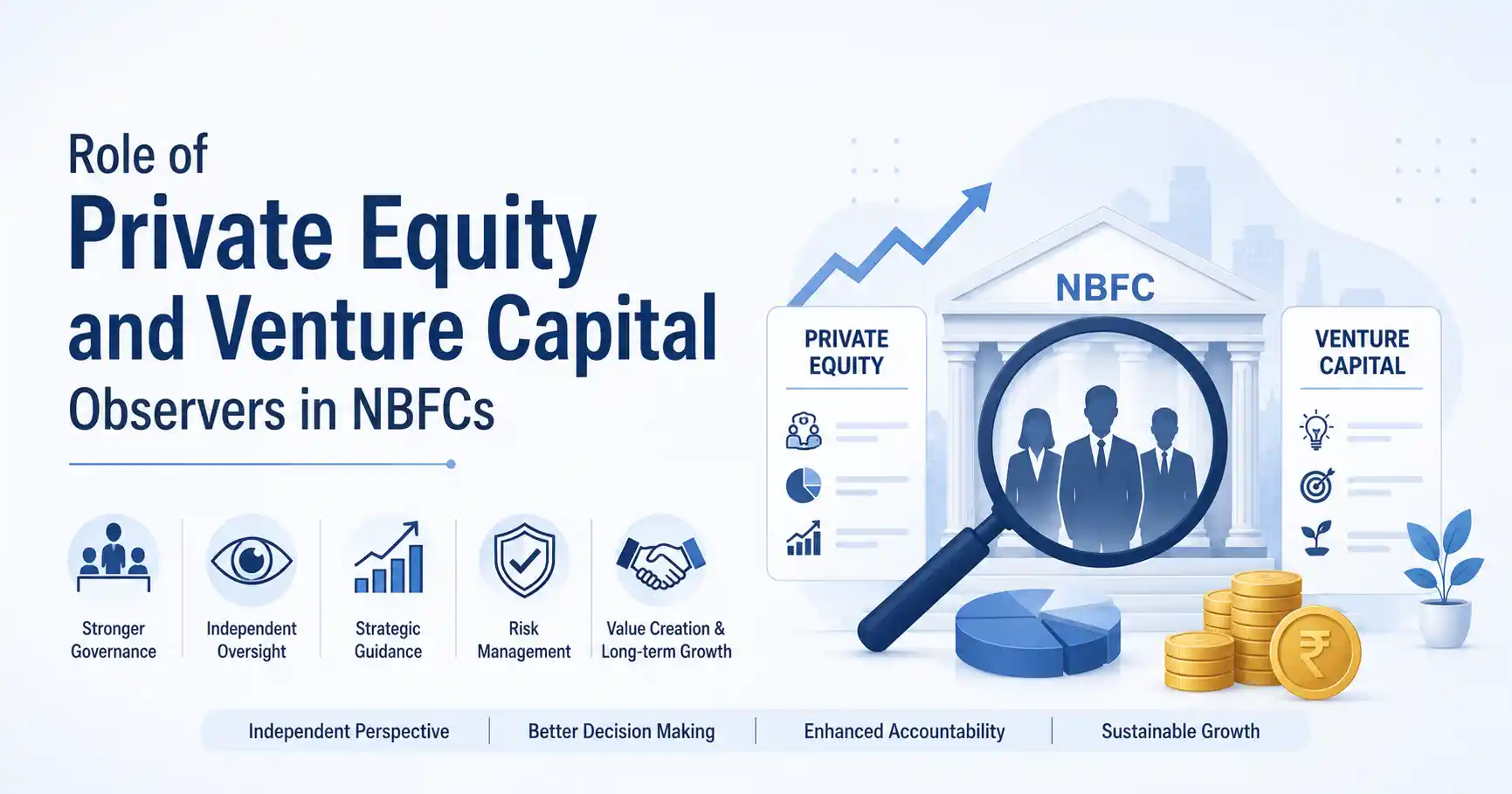
NBFCs have been significant recipients of PE and VC investments in recent years. According to an RBI report, in more than 160 deals between 2020 and 2023, over ₹88,000 crore was infused into finance companies. During this period, Indian banking and financial services companies (including fintech firms) received ₹2.59 lakh crore in investments from Private Equity (PE) and Venture Capital (VC) fund investors.
There has been a significant shift impacting the role of PE and VC fund investors in Non-Banking Financial Companies (NBFCs). Institutional investors, particularly those with significant equity stakes in NBFCs, can no longer enjoy “power without responsibility.” This shift is expected to impact the practice of appointing board “observers” instead of formal directors — a strategy often used by investors to avoid the legal liabilities and obligations associated with directorial positions.
Role of Board Observers
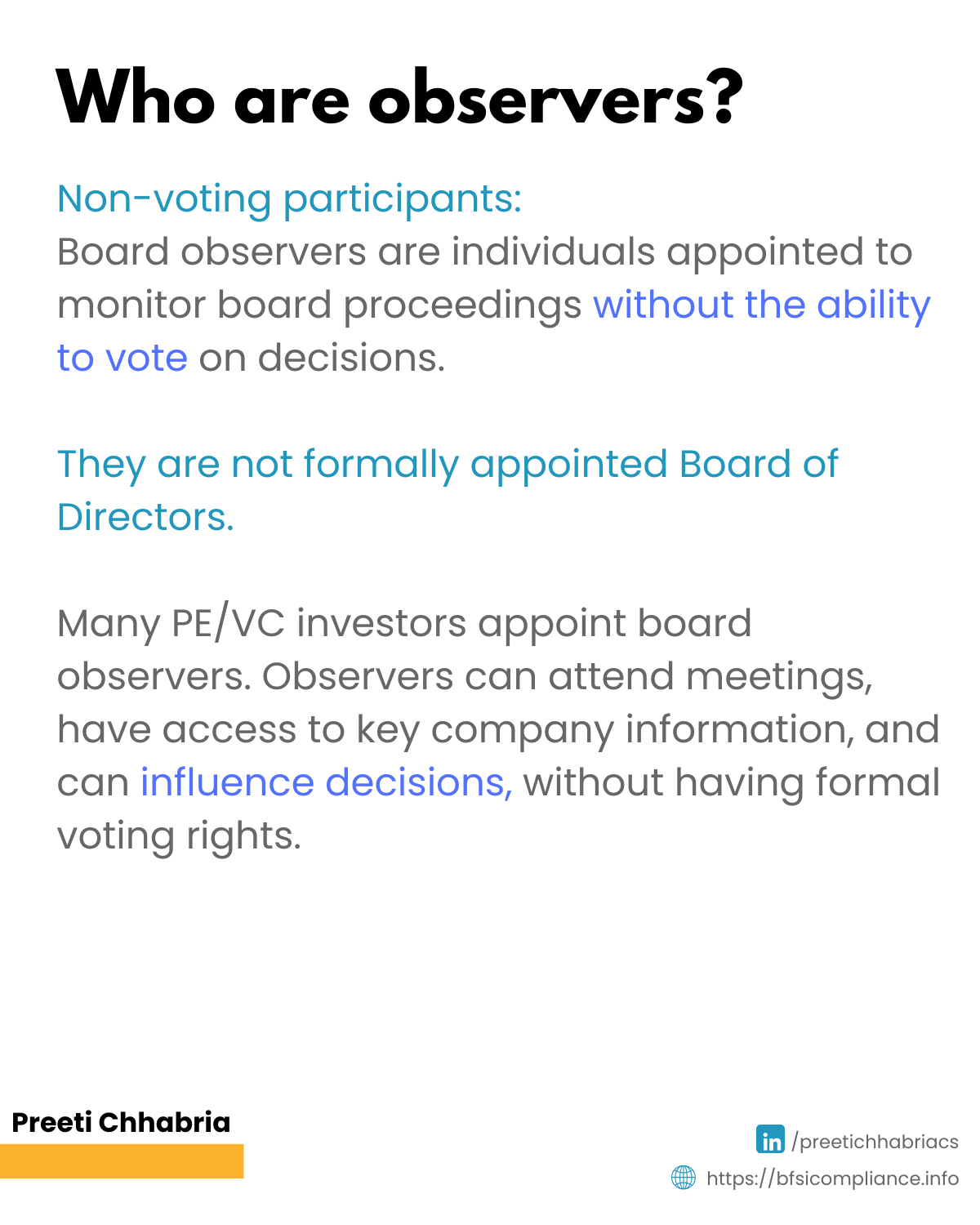
Typically, investors in NBFCs, especially those holding substantial stakes, appoint board observers. These observers attend board meetings to monitor proceedings, provide strategic input, and influence decision-making. However, they do not hold formal voting rights, nor are they legally accountable for the company’s actions.
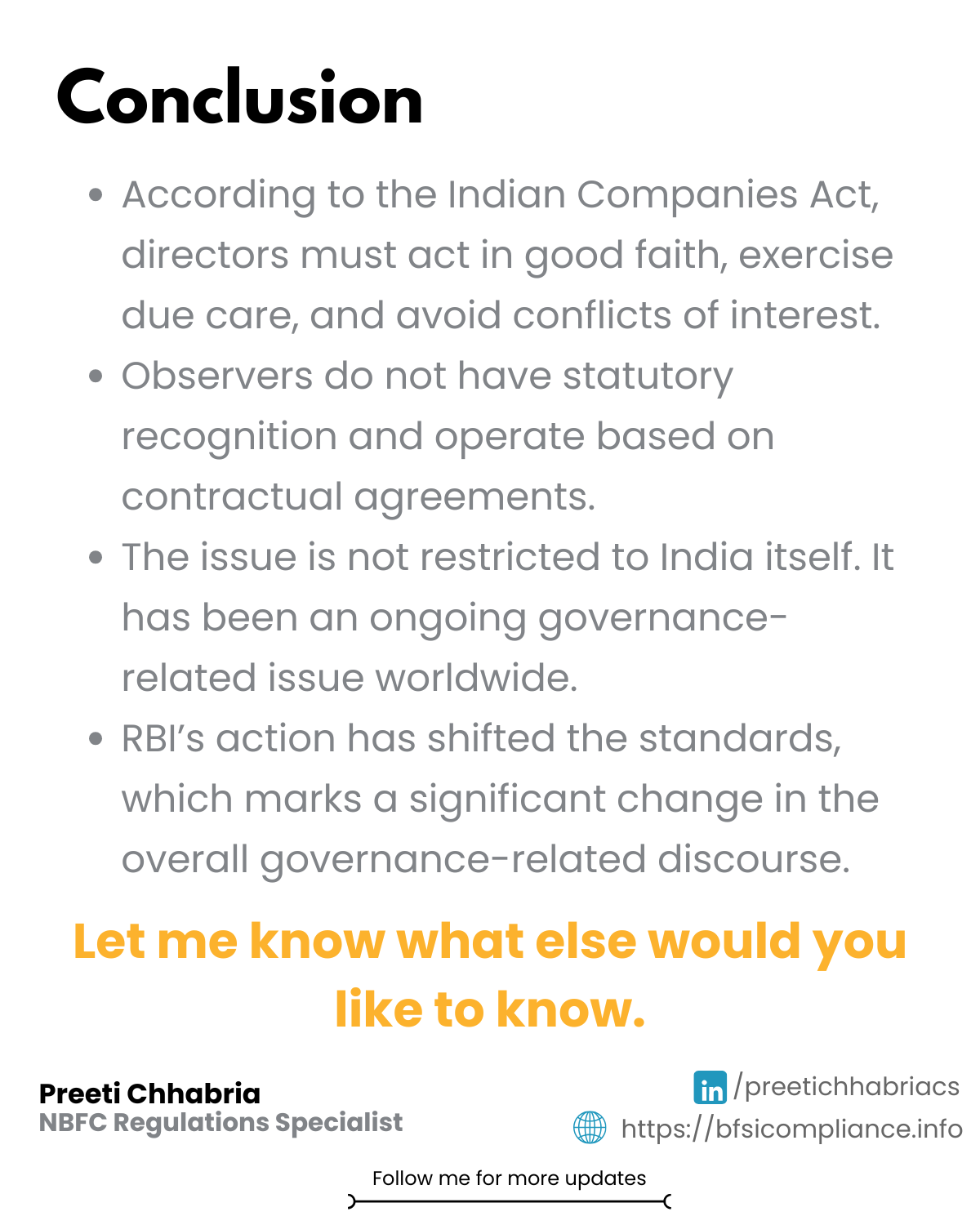
Their role is largely advisory and operates through contractual agreements rather than statutory recognition under the Indian Companies Act.
Governance Issues with Board Observers
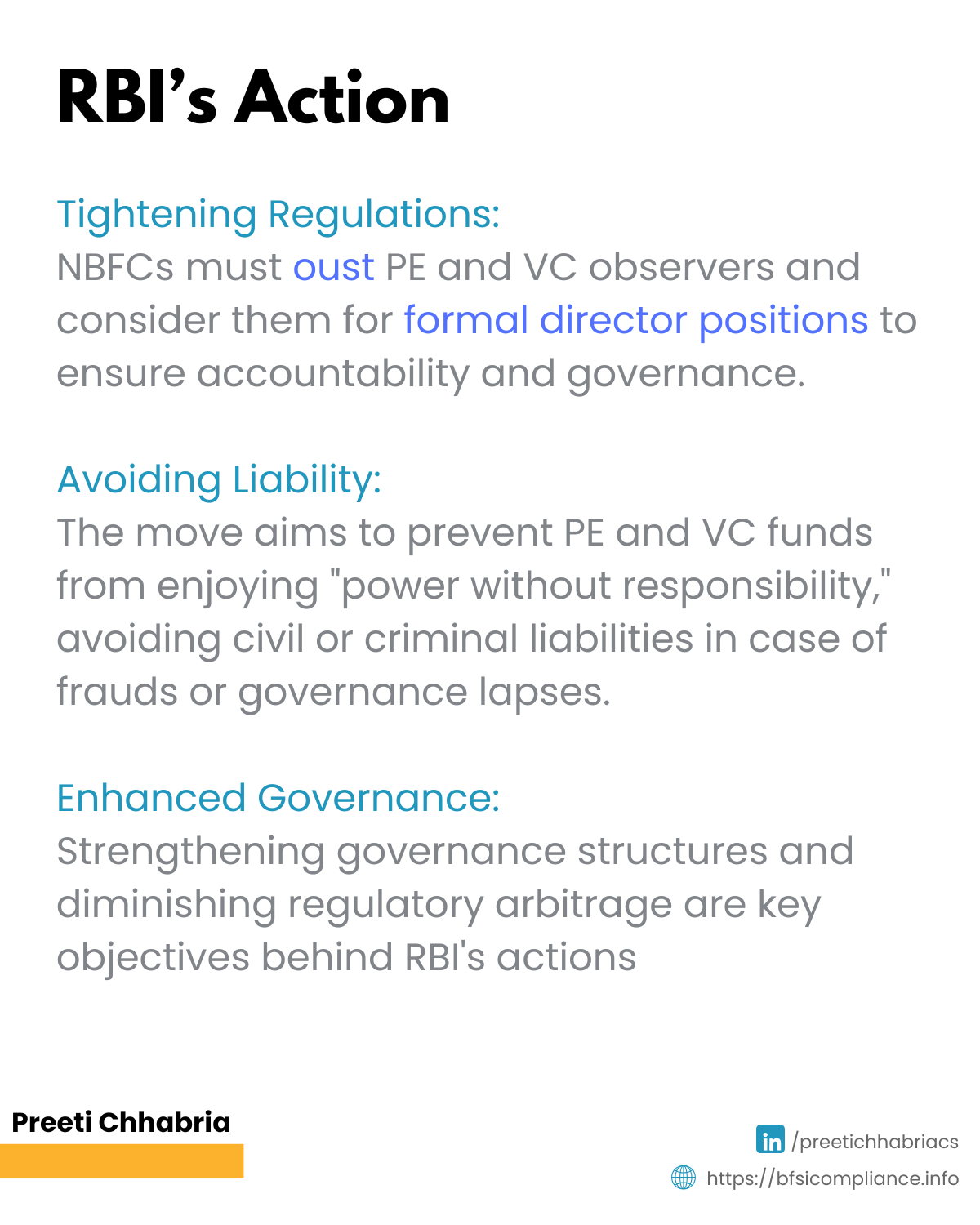
The RBI reportedly sought information regarding the appointment of observers on the boards of NBFCs by PE/VC funds holding equity stakes. Based on this review, the RBI communicated its stance to several NBFCs, advising companies either to ask such observers to resign or to consider appointing them formally as directors.
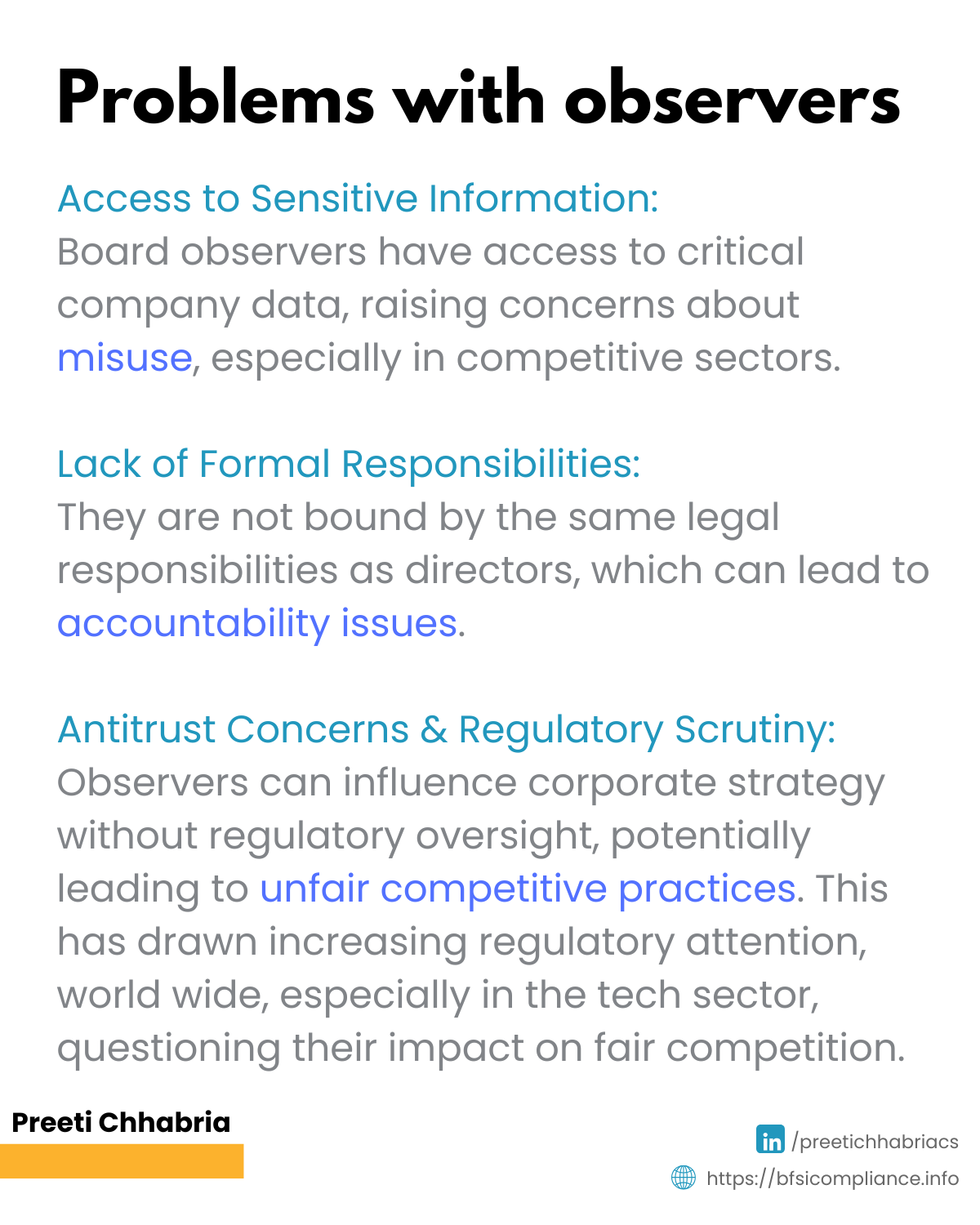
The RBI’s concern stems from the fact that observers can significantly influence company decisions without assuming the legal responsibilities borne by directors. While observers have access to sensitive corporate information and strategic discussions, they are not bound by the same fiduciary duties and accountability standards applicable to directors.
This creates potential governance concerns, as observers may shape corporate strategies without being held responsible for oversight failures, poor decisions, or regulatory violations.
The RBI’s approach seeks to eliminate this “power without responsibility” structure. By encouraging NBFCs to formally appoint observers as directors, the central bank aims to strengthen governance frameworks, close regulatory gaps, and ensure accountability for individuals exercising significant influence over company operations.
Formal notifications or detailed guidelines from the RBI in this regard are still awaited.
Legal Perspective
The legal basis for this regulatory push arises from the Indian Companies Act, which requires directors to:
* Act in good faith
* Exercise due diligence
* Avoid conflicts of interest
* Fulfil fiduciary responsibilities
Observers, however, do not enjoy statutory recognition under the law. Their role remains contractual, allowing them to contribute strategically without assuming the liabilities associated with corporate decision-making.
Worldwide Concerns Regarding Observers
This regulatory tightening aligns with broader global concerns regarding the role of observers in corporate governance, particularly in sectors such as finance and technology.
For example, in the technology industry, major investors like Microsoft and Apple faced increased scrutiny over their observer roles on the board of OpenAI, the company behind ChatGPT. Eventually, both companies relinquished these observer positions, and OpenAI adopted a more inclusive governance model involving structured stakeholder engagement.
Rising Role of PE/VC Investors
This shift comes at a time when the Indian Banking, Financial Services, and Insurance (BFSI) sector is witnessing a strong influx of PE and VC funding.
Between 2020 and mid-2024, Indian BFSI companies attracted ₹2.59 lakh crore in investments, with NBFCs emerging as major recipients. However, this increasing capital flow has also intensified discussions around governance, accountability, and investor influence over corporate strategy.
Summing Up
These regulatory developments are expected to strengthen governance frameworks within NBFCs. The move also reflects a broader global trend toward reducing regulatory arbitrage and ensuring that individuals exercising substantial influence over corporate decision-making are held accountable for their actions.
This shift may prove to be a significant step toward improving corporate governance standards in India’s financial sector.
I have been writing regularly about Governance, Risk Management, and Compliance (GRC) frameworks on LinkedIn and my blog.
Follow me on LinkedIn for updates on compliance, NBFCs, BFSI, governance, and regulatory developments:
https://www.linkedin.com/in/preetichhabriacs/
You can also subscribe to receive updates directly in your inbox:
https://bfsicompliance.info/subscribe-for-alerts/